
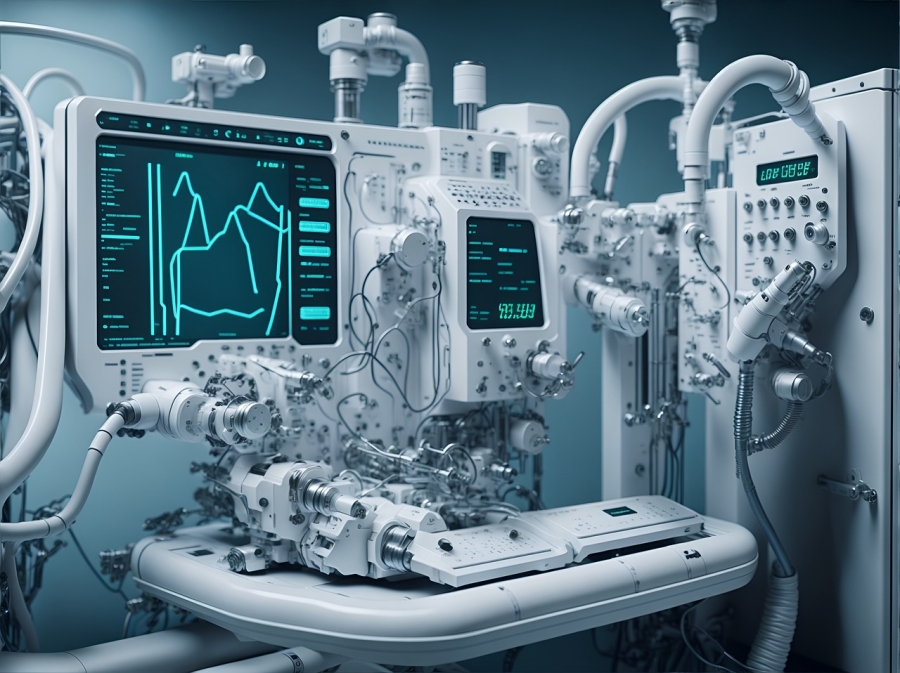
Transforming Healthcare with Artificial Intelligence: A Closer Look at AI's Impact
Introduction:
In the realm of technological advancements, few fields hold as much promise and potential as the intersection of Artificial Intelligence (AI) and healthcare. The fusion of these two domains is reshaping the landscape of medical diagnosis, treatment, and patient care. From improving diagnostics accuracy to enhancing patient outcomes, AI is revolutionizing healthcare in ways that were once thought to be purely science fiction. In this article, we delve into the transformative impact of AI on healthcare and explore some of the groundbreaking applications that are changing the way we approach medical challenges.
Diagnostic Precision: AI-Powered Imaging Analysis
One of the most remarkable contributions of AI to healthcare is its role in medical imaging analysis. AI algorithms can swiftly process complex medical images such as X-rays, MRIs, and CT scans, pinpointing subtle anomalies that may elude human eyes. By automating this process, AI assists medical professionals in detecting diseases like cancer, cardiovascular conditions, and neurological disorders at earlier stages, enabling timely interventions and improved patient outcomes.
Personalized Treatment Plans: Tailoring Healthcare
AI-driven predictive analytics is paving the way for personalized treatment plans. By analyzing vast amounts of patient data, including medical history, genetic information, and lifestyle factors, AI algorithms can predict an individual's response to specific treatments. This empowers doctors to design personalized therapeutic approaches, increasing treatment effectiveness while minimizing adverse effects.
Drug Discovery Acceleration: Revolutionizing Pharmaceuticals
The process of drug discovery is notorious for its time and resource demands. AI algorithms are streamlining this process by simulating molecular interactions and predicting the potential efficacy of drug compounds. This not only expedites drug discovery but also holds the potential to unlock treatments for diseases that have long evaded effective pharmaceutical solutions.
Remote Patient Monitoring: Enhancing Patient Care
AI-powered wearable devices and remote monitoring systems are transforming patient care beyond hospital walls. These devices can continuously track vital signs, detect irregularities, and alert medical professionals to potential issues. Patients with chronic conditions can benefit from real-time monitoring, enabling early intervention and reducing hospital readmissions.
Natural Language Processing in Healthcare: Enabling Efficient Documentation
AI's natural language processing (NLP) capabilities are being harnessed to streamline administrative tasks in healthcare. Voice recognition and NLP algorithms are used to transcribe medical notes, enabling doctors to spend more time with patients and less time on paperwork. This not only improves efficiency but also enhances the doctor-patient relationship.
Early Disease Detection: Saving Lives Through AI
AI algorithms excel at analyzing large datasets to identify patterns and trends that might indicate the presence of diseases. In some cases, AI systems have shown the potential to detect diseases like diabetic retinopathy and certain cancers at remarkably early stages, allowing for prompt interventions and potentially saving lives.
Telemedicine and Virtual Health Assistants: Bridging Gaps
The integration of AI into telemedicine platforms is making quality healthcare accessible to remote and underserved populations. Virtual health assistants powered by AI can conduct preliminary assessments, answer patient queries, and provide relevant medical information, making healthcare more inclusive and convenient.
Conclusion:
The synergy between Artificial Intelligence and healthcare is ushering in a new era of medical possibilities. AI is not replacing human expertise; rather, it's complementing and enhancing the capabilities of medical professionals. As the AI technology continues to evolve, it's crucial to address challenges related to data privacy, algorithm transparency, and ethical considerations. With responsible implementation, AI has the potential to revolutionize patient care, improve diagnostics, and drive medical breakthroughs, ultimately contributing to a healthier and more technologically advanced world.




Comments (0)