
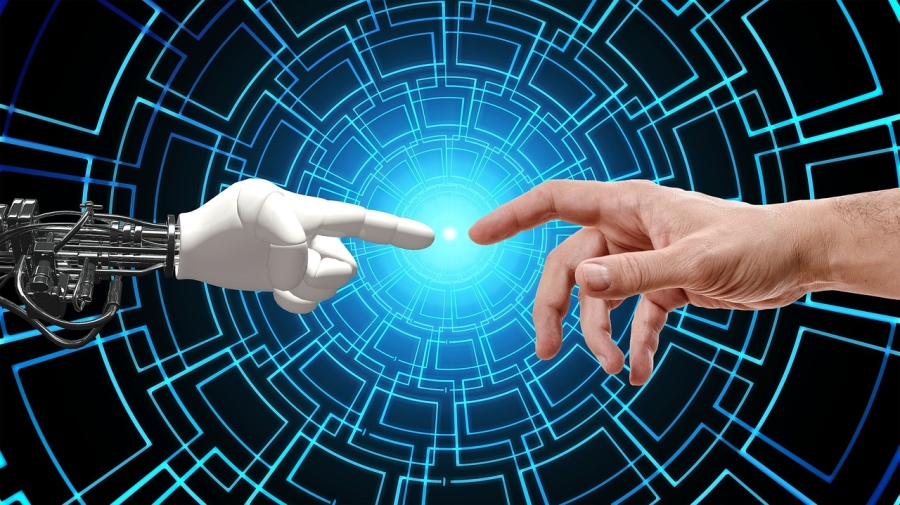
Unveiling Tomorrow's Companions: The Revolution of Human-Robot Interaction with AI
Introduction:
In the realm of science fiction, robots have long been depicted as futuristic companions. Today, that vision is becoming a reality, thanks to the intersection of Artificial Intelligence (AI) and robotics. This blog delves into the fascinating world of human-robot interaction, exploring how AI is driving the evolution of conversational AI, social robots, and the ethical considerations that come with this technological advancement.
1. Conversational AI: Conversations with Machines:
Gone are the days of one-sided conversations with machines. AI-powered conversational agents engage in meaningful dialogues, responding intelligently and adapting to human nuances, making interactions feel more natural and fluid.
2. Social Robots: Machines with Empathy:
Social robots are more than just mechanical beings; they possess the ability to understand emotions and respond with empathy. AI enables these robots to read facial expressions, gestures, and tones, fostering genuine connections.
3. Collaborative Partners: Humans and Robots as Teams:
AI bridges the gap between humans and robots, enabling them to collaborate in various scenarios, from manufacturing to healthcare. Robots understand human commands and can assist in tasks, augmenting human capabilities.
4. Ethical Considerations: AI's Role in Human-Robot Relations:
As AI and robots become more integrated into our lives, ethical questions arise. How much autonomy should robots have? How do we prevent biases in AI from affecting human-robot interactions? Striking the right balance is crucial.
5. Designing Ethical AI: Ensuring Positive Interactions:
AI ethics play a pivotal role in human-robot interaction. Designing AI with ethical guidelines ensures that robots uphold human values, respect privacy, and prioritize safety in every interaction.
6. Emotional Intelligence: AI's Ability to Connect:
AI doesn't just process data; it understands emotions. Emotional AI algorithms allow robots to respond appropriately to a range of emotions, making interactions more human-like and relatable.
7. AI as a Learning Partner: Education and Beyond:
AI-driven robots are transforming education by providing personalized learning experiences. They adapt to students' needs, offering guidance, explanations, and feedback, enhancing the learning process.
8. Overcoming Challenges: AI's Journey in Human-Robot Interaction:
Despite rapid advancements, challenges persist. Ensuring that robots understand complex emotions, respect cultural differences, and maintain user privacy requires ongoing research and development.
Conclusion:
The synergy of AI and robotics is blurring the lines between human and machine interactions. As AI-driven social robots become our companions and collaborators, they offer more than just efficiency—they offer empathy, understanding, and even friendship. Yet, as we embrace this evolution, we must tread carefully, keeping AI ethics at the forefront. With every step forward, we shape a future where humans and robots coexist harmoniously, exchanging ideas, empathy, and progress in a partnership that's driven by innovation and guided by our shared humanity.




Comments (0)